家事
China-Tanzania healthcare cooperation brings AI-powered diagnosis to patients_我的网站

一 |

Niu Lai, a low-budget original animation with rudimentary character modeling and an unconventional, abstract storyline, hit Chinese theaters on August 5 but earned just 7,169 yuan ($995) during its first nine days. But its cumulative box office had surpassed 2.5 million yuan as of press time.
Niu Lai opened with little of the machinery normally associated with a commercial theatrical release. It had no star-studded cast, major promotional campaign or significant pre-release buzz. Its opening-day box office was just over 3,400 yuan ($474), with fewer than 300 moviegoers watching it during its first nine days, according to Maoyan.
That changed on August 14, when a social media topic about its nine-day box office of just over 7,000 yuan went viral. Rather than praising the film, many users were drawn to its unusually rough production and two-person creative team.
Terms such as “the most basic theatrical film,” “disaster-level” and “worse than AI-generated animation” circulated online, with some netizens saying they could “hardly believe it was a Chinese animated film released in 2026.” Others said they wanted to see it simply to find out “just how bad it could be.” Some even joked that stock market investors were heading to theaters after wishing for a “bull market” to arrive soon.
The online buzz has also sparked a wave of fan-made content, with netizens inserting the film's little bull character into posters for various classic movies. The playful edits have further fueled its visibility on social media, turning Niu Lai into an internet meme and a shared online joke.
The film's viral attention also spawned jokes that Nolan might not have expected Niu Lai to become an unlikely rival to The Odyssey, which opened in China on August 14 amid intense competition for summer moviegoers.
Its rise stands in sharp contrast to the conventional logic of China's increasingly competitive theatrical market, particularly this summer, when a string of high-profile releases, including The Odyssey, Once Upon a Time in the Middle East and Spider-Man: Brand New Day, are competing for audiences.
"Niu Lai has been driven by curiosity and social currency, with audiences essentially paying a premium for the feeling of being part of a trending phenomenon. Curiosity can generate genuine audience interest, but social-media-driven hype is essentially a bubble built on traffic," Zhang Peng, a cultural researcher and associate professor at Nanjing Normal University, told the Global Times.
"When cinemas add screenings for Niu Lai, they may appear to be responding quickly to market demand, but in reality, they are giving in to online buzz rather than making decisions based on the quality of the film itself," Zhang said.
According to Zhang, The Odyssey's strong reception and high theater attendance in China demonstrate that high-quality content, combined with a distinctive and hard-to-replicate theatrical experience, remains at the heart of the cinema business.
"Niu Lai, meanwhile, serves as a warning that speculative filmmaking and curiosity-driven marketing should not be mistaken for a replicable formula, as relying on such tactics offers little positive value for the long-term development of the film industry," he said.
"A fleeting viral frenzy can never replace a solid creative foundation. Content quality remains the enduring value that will sustain the film industry over the long term," Zhang said.
。
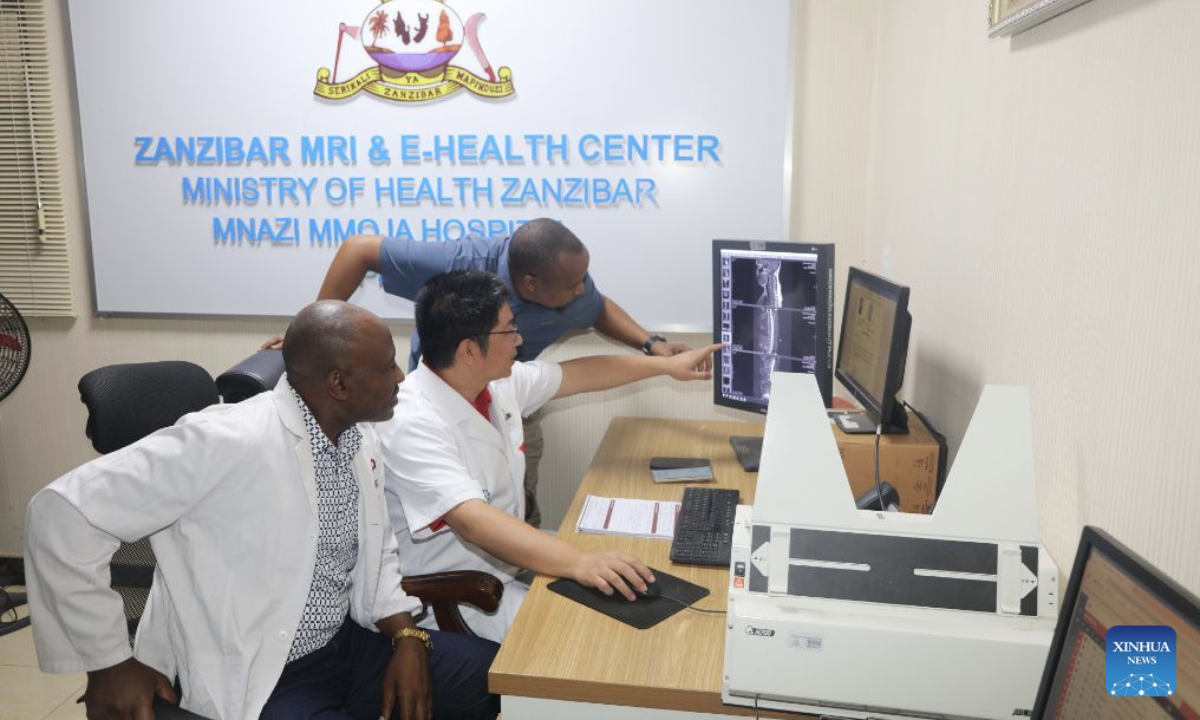
On the island, artificial intelligence (AI) systems are helping doctors interpret medical images, while remote consultations connect local physicians with specialists thousands of kilometers away.
Bridging this distance is Yuan Gang, a radiologist with the 35th Chinese medical team in Zanzibar, who combines local imaging, cloud-based AI analysis, and real-time specialist consultations.
For years, Zanzibar's healthcare system has faced challenges in diagnosing complex diseases, particularly because of limited imaging expertise, heavy workloads, and the lack of advanced diagnostic tools, said local physician Haitham Hamudu.
Imaging interpretation, often described as the "eyes" of modern medicine, has been especially constrained by limited expertise, heavy workloads, and a lack of advanced tools, Haitham said.
By linking the hospital's imaging system with the First People's Hospital of Lianyungang in east China's Jiangsu Province, he has introduced a three-layer diagnostic approach, which includes initial reading by local doctors, AI-assisted detection and classification, and quality control through Chinese specialist review.
This hybrid model is enabling doctors in Zanzibar to access the precision and standards of top-tier Chinese hospitals without requiring patients to leave the island.
"Technology is allowing us to overcome distance and resource gaps," Yuan said. "It is not just about solving one case, but about building a system that improves care for many patients."
One of the most striking cases involved a young Zanzibari child suffering from recurrent vomiting and lethargy.
After reviewing the child's Magnetic Resonance Imaging scans, Yuan diagnosed hydrocephalus but found the underlying cause unclear. He immediately initiated a remote consultation with neuroradiology experts in the Chinese city of Lianyungang.
By jointly reviewing the imaging data and clinical records, the team identified the hidden cause, provided a precise diagnosis and treatment recommendations, giving local doctors a clear path forward and the child a renewed chance at recovery.
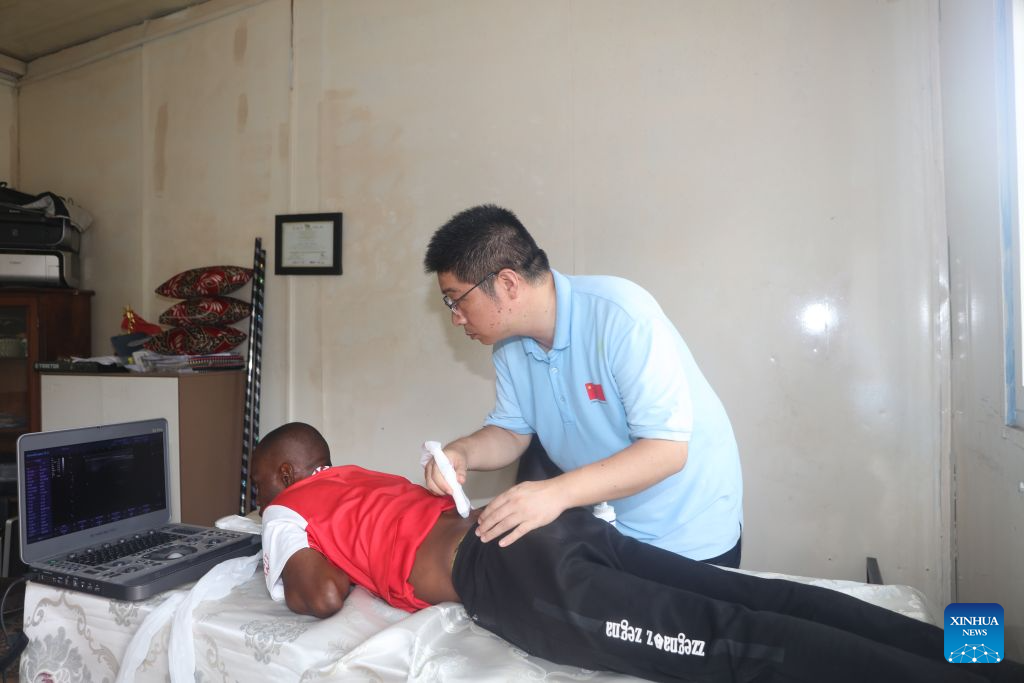
Beyond individual cases, Yuan has introduced AI-powered imaging tools to improve diagnostic accuracy in Zanzibar.
He said many women have dense breast tissue, making breast cancer harder to detect with conventional mammography. AI-assisted mammography now analyzes images, classifies lesions using the internationally recognized Breast Imaging Reporting and Data System, and helps doctors assess malignancy risk.
In one case, a 42-year-old woman with mild breast pain showed no obvious abnormalities on routine examination. AI, however, detected two hidden nodules and accurately classified their risk, helping doctors avoid unnecessary procedures while ensuring timely follow-up.
Similarly, AI-assisted lung imaging is improving the early detection of pulmonary nodules that are often missed in manual readings.
In one case, a 56-year-old man with a chronic cough was initially diagnosed with inflammation. Yuan's review, supported by AI analysis, identified four small nodules, including one with high-risk features, prompting closer monitoring and potentially preventing the progression of an early tumor.
Beyond diagnosis, Yuan is helping local doctors adopt AI tools, standardized reporting systems, and structured diagnostic methods through hands-on training and case-based teaching, improving diagnostic accuracy while strengthening local capacity.
The AI imaging initiative is part of a broader digital healthcare partnership between China and Tanzania's Zanzibar, Yuan said.
The hospital and its partner institution in Lianyungang have established regular remote multidisciplinary team consultations, bringing together specialists in neurosurgery, oncology, and other disciplines to jointly review complex cases and develop treatment plans.
"I have never seen this kind of consultation before," said local physician Haitham. "So many experts working together, providing practical solutions. It is very inspiring."
Bao Zengtao, leader of the Chinese medical team, said remote consultations not only improve patient care but also enhance the professional capacity of local healthcare workers.
Yuan added that the ultimate goal is to build a sustainable model that can be expanded across Africa, ensuring more patients have access to accurate diagnosis and timely treatment.

。

二 |
Current article:http://fllh255.zhaoliebengkuaiwaigeqi.bond/un9ltc/otpuly.html
Published on:17:41:23